

Over fifty percent of American adults experience muscle weakness or joint pain during rehabilitation. With traditional therapies often leading to slow progress, finding faster and safer methods is more important than ever. Blood Flow Restriction training is quickly gaining ground in the United States as an innovative way to stimulate muscle strength and speed up recovery using lighter exercise loads. Discover how this science-backed technique is redefining the path to better healing and performance.
Blood Flow Restriction Training Explained
Blood Flow Restriction (BFR) training represents an innovative rehabilitation technique that leverages strategic blood flow manipulation to accelerate muscle recovery and strength development. This groundbreaking approach involves applying specialized tourniquets or inflatable cuffs to specific limb regions during low-intensity exercise, creating a unique physiological environment.
The core mechanism of BFR training centers on partially restricting blood circulation to working muscles. By reducing arterial blood flow and limiting venous return, practitioners generate a controlled hypoxic state that triggers remarkable physiological adaptations. Muscles respond as if experiencing high-intensity training, despite using significantly lighter weights and lower exercise volumes. This technique stimulates muscle hypertrophy, enhances strength gains, and accelerates rehabilitation processes with minimal joint stress.
Specific benefits of BFR training include:
- Muscle strength development without heavy loading
- Accelerated muscle protein synthesis
- Reduced risk of further injury during rehabilitation
- Enhanced metabolic stress response
- Improved muscle endurance
Professional athletes and physical therapists increasingly recognize BFR training as a powerful rehabilitation strategy that bridges the gap between recovery and performance enhancement. By carefully managing blood flow during exercise, individuals can maintain muscle mass, prevent atrophy, and rebuild strength more efficiently than traditional rehabilitation approaches.

How BFR Accelerates Regenerative Rehab
Blood Flow Restriction (BFR) training emerges as a revolutionary rehabilitation technique that significantly accelerates recovery by creating unique physiological adaptations. Advanced research demonstrates that this method improves cardiac function and vascular health while enabling muscle development through low-intensity exercises, making it particularly effective for patients unable to perform traditional high-intensity training.
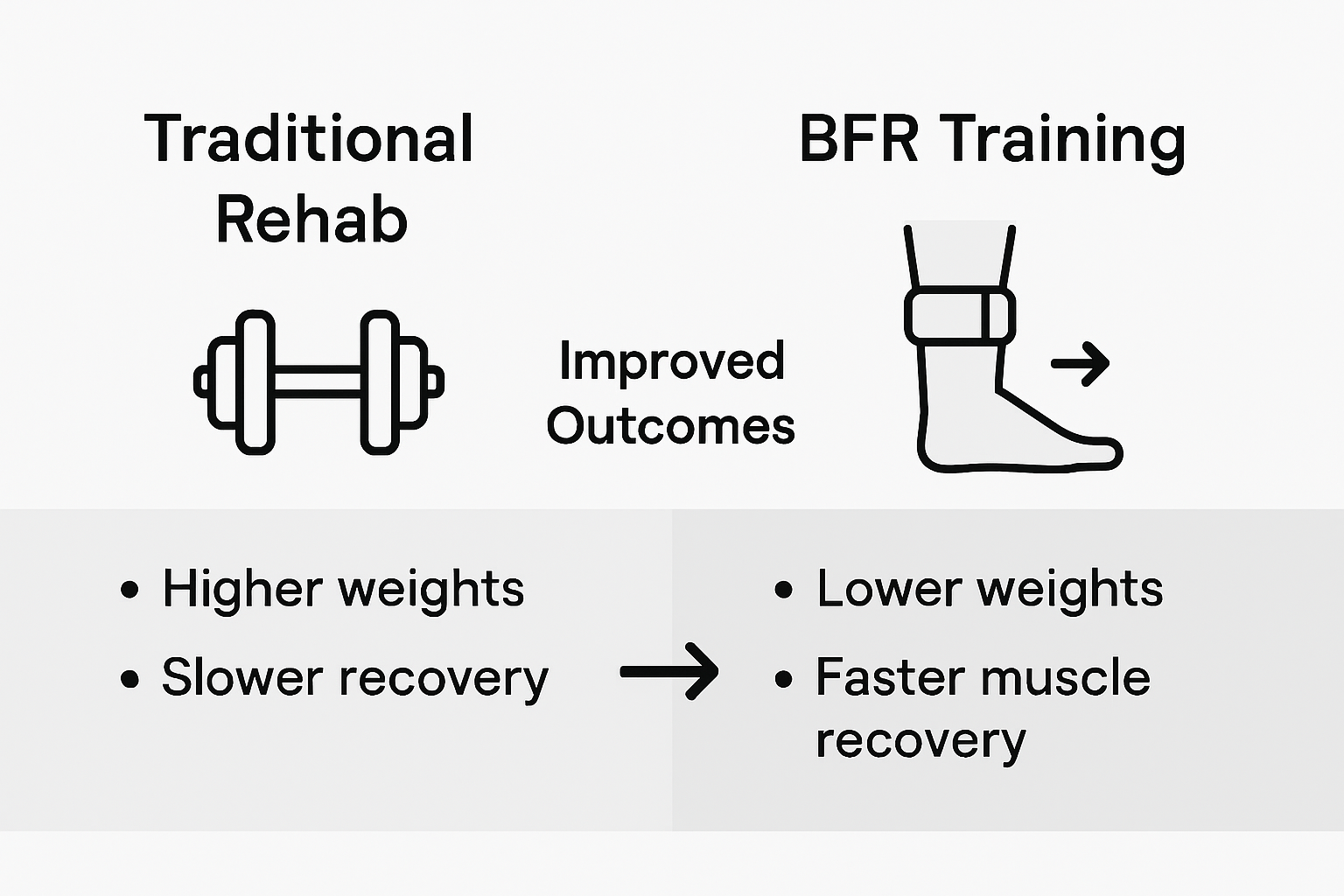
The core regenerative mechanism of BFR centers on strategic blood flow manipulation. By partially restricting circulation during exercise, practitioners trigger metabolic stress responses that stimulate muscle protein synthesis and tissue repair. This approach allows patients to generate strength gains and muscle hypertrophy without placing excessive strain on healing tissues, which is crucial for effective rehabilitation. Systematic studies have shown remarkable improvements in lower-limb muscle strength, especially among post-middle-aged adults recovering from injury or surgery.
Key regenerative benefits of BFR training include:
- Muscle strength development with minimal joint stress
- Enhanced metabolic signaling for tissue repair
- Improved vascular function and circulation
- Accelerated muscle protein synthesis
- Reduced recovery time compared to traditional rehabilitation methods
Physical therapists increasingly recognize BFR as a powerful post-surgical rehabilitation strategy that bridges the gap between initial injury and full functional recovery. By carefully controlling blood flow during targeted exercises, patients can maintain muscle mass, prevent atrophy, and rebuild strength more efficiently than traditional approaches, ultimately supporting a faster and more comprehensive healing process.
Who Benefits Most From BFR Therapy
Blood Flow Restriction (BFR) therapy demonstrates remarkable versatility in addressing diverse patient needs, with specific populations experiencing exceptional outcomes. Research highlights significant performance improvements among young athletes aged 14-26, showing enhanced strength, power, speed, endurance, and body composition through targeted BFR interventions.
Multiple demographic groups can leverage BFR therapy’s unique rehabilitation potential. Scientific studies reveal that untrained individuals, particularly males new to resistance training, can achieve substantial muscle hypertrophy and strength gains using low-load resistance techniques. This makes BFR an excellent option for individuals who struggle with traditional high-intensity training methods or have limited exercise capacity.
Key populations benefiting from BFR therapy include:
- Post-surgical patients
- Athletes recovering from injuries
- Older adults experiencing muscle weakness
- Individuals with joint limitations
- Rehabilitation patients with restricted movement
- Athletes seeking performance optimization
Physical therapists increasingly recommend advanced physical therapy techniques like BFR for patients requiring customized rehabilitation strategies. By providing a low-stress, high-efficiency approach to muscle development and recovery, BFR therapy bridges critical gaps in traditional rehabilitation, offering hope and tangible results for individuals across various fitness and health spectrums.
Safety, Risks, And Common Misconceptions
Blood Flow Restriction (BFR) therapy offers significant rehabilitation benefits, but understanding potential risks is crucial for safe implementation. Comprehensive research highlights critical safety considerations that practitioners and patients must carefully evaluate before beginning treatment. While BFR can be highly effective, certain medical conditions and individual health factors can increase potential complications.
Several key risks and misconceptions surround BFR training that patients and healthcare providers must understand. Scientific investigations reveal ongoing concerns about standardization, including inconsistent protocols for cuff pressure and practitioner training. The lack of uniform guidelines means that improper application could potentially impact cardiovascular, nervous, and muscular systems.
Common misconceptions about BFR therapy include:
- BFR is safe for everyone
- More pressure equals better results
- No specialized training is required for application
- BFR works identically for all population groups
- Potential risks are minimal and negligible
Potential contraindications and risks require careful medical screening, including:
- History of deep vein thrombosis
- Compromised circulation
- Hypertension
- Active cancer treatments
- Acute injuries or infections
Patients considering BFR should always consult advanced physical therapy professionals to ensure personalized assessment and safe implementation. Proper evaluation, individualized approach, and ongoing monitoring remain essential for maximizing therapeutic benefits while minimizing potential complications.
Comparing BFR With Traditional Rehab Options
Blood Flow Restriction (BFR) training represents a groundbreaking alternative to traditional rehabilitation methods, offering unique advantages for patients recovering from injury. Systematic research demonstrates that BFR can effectively generate muscular strength gains without requiring high-load resistance training, making it particularly beneficial for patients with limited exercise capacity or those recovering from surgical procedures.
Traditional rehabilitation often relies on progressive weight training and high-intensity exercises, which can be challenging or impossible for patients with injury limitations. Scientific investigations reveal that BFR training can significantly enhance physical performance, including improvements in vertical jump height and maximal oxygen uptake, providing comparable benefits to conventional rehabilitation approaches with reduced physical strain.
Key differences between BFR and traditional rehabilitation include:
- Lower mechanical stress on joints
- Ability to achieve strength gains with lighter weights
- Faster muscle protein synthesis
- Reduced recovery time
- More adaptable to individual patient limitations
- Less risk of further injury
Athletes and rehabilitation patients can benefit from advanced return to sport strategies that incorporate BFR techniques. By offering a more nuanced and less invasive approach to muscle recovery, BFR bridges the gap between traditional rehabilitation and optimal performance, providing a sophisticated alternative for individuals seeking efficient and comprehensive healing strategies.
Unlock Faster Recovery with Blood Flow Restriction Training
Struggling with slow muscle recovery or limited exercise options after injury? Blood Flow Restriction (BFR) training offers a revolutionary solution by accelerating muscle strength and healing with low-impact exercises. If you want to avoid the challenges of traditional rehab and reduce joint stress while rebuilding strength, BFR could be the key to your comeback. This innovative method stimulates muscle growth and speeds recovery through controlled blood flow techniques applied safely under expert guidance.

Experience personalized care that combines BFR with advanced regenerative therapies tailored to your needs at RegenTech Physical Therapy. Explore our full range of Innovative Treatments Archives – Regentech Physical Therapy and learn how cutting-edge approaches boost functional outcomes. Ready to rise stronger and faster? Visit RegenTech Physical Therapy today and schedule a consultation. Take the first step toward restoring your movement and vitality through proven, effective solutions designed for your unique recovery journey.
Frequently Asked Questions
What is Blood Flow Restriction (BFR) training?
BFR training is a rehabilitation technique that involves partially restricting blood flow to muscles during low-intensity exercise using specialized cuffs or tourniquets. This method helps stimulate muscle hypertrophy, enhance strength gains, and support rehabilitation with less joint stress.
Who can benefit from BFR training?
BFR training is beneficial for various individuals, including post-surgical patients, athletes recovering from injuries, older adults with muscle weakness, and individuals with movement restrictions. It is particularly effective for those unable to engage in traditional high-intensity training.
How does BFR training compare to traditional rehabilitation methods?
BFR training offers unique advantages over traditional rehab methods, such as achieving strength gains with lighter weights, lower mechanical stress on joints, and faster muscle protein synthesis, making it a suitable option for patients with limited exercise capacity.
What safety precautions should be taken when using BFR therapy?
Before starting BFR therapy, individuals should consult a healthcare professional, especially if they have medical conditions like deep vein thrombosis, compromised circulation, or hypertension. Proper assessment and monitoring are essential to ensure safe application and maximize benefits.
Recommended


