

Headaches impact daily life for thousands of American adults in Lewiston, with many struggling to find lasting relief from chronic pain. Scientific reports reveal that over 70 percent of people experience tension headaches linked to muscle strain in the neck and complex nervous system patterns. For those seeking more than temporary fixes, understanding how the neck and brain interact opens the door to promising therapies and a future with less discomfort.
Headaches and Neck Tension Explained
Tension headaches represent the most prevalent form of head pain. Affecting millions who experience consistent, uncomfortable muscle strain around the head and neck regions. Tension headaches typically cause a steady, mild to moderate pain that feels like a tight band squeezing across both sides of the head. Often originating from muscular stress and neurological tension patterns.
The underlying mechanisms behind tension headaches involve complex interactions between muscle contractions, nervous system responses, and emotional stress. Researchers have discovered that muscle tightness in the neck and shoulders can trigger neurological pain signals, creating a cyclical pattern of discomfort. Changes in pain perception within the brain contribute significantly to these headache experiences. As well as emotional fatigue and psychological strain playing crucial roles in generating persistent head pain.
Understanding the root causes of neck tension helps individuals develop targeted strategies for relief. Common contributors include poor posture, prolonged desk work, psychological stress, inadequate sleep, and limited physical movement. The body’s muscular and nervous systems become interconnected, with sustained tension creating neurological pathways that amplify pain sensations. By addressing these underlying factors through holistic approaches like targeted physical therapy, stress management techniques, and ergonomic adjustments, individuals can interrupt the cycle of chronic head and neck discomfort.
Pro Tip: Perform gentle neck stretches every two hours during sedentary work to reduce muscle tension and prevent headache development.
Types of Headaches Linked to the Neck
Cervicogenic headaches represent a unique category of head pain with a direct neurological connection to neck structures. These specialized headaches originate from cervical spine injuries or conditions affecting bones, joints, and nerves, creating a complex pain pattern that extends beyond traditional headache experiences. Unlike typical tension headaches, cervicogenic headaches often manifest as one-sided head pain that begins at the base of the skull and radiates forward, with neck movement significantly impacting pain intensity.
The neurological mechanisms behind neck-related headaches involve intricate interactions between spinal nerves, muscle tension, and pain signal transmission. Specific conditions like cervical spine arthritis, nerve compression, and structural malformations can trigger these specialized headache patterns, creating a cascade of neurological responses that amplify pain sensations. Patients frequently experience additional symptoms, including neck stiffness, reduced range of motion, and localized nerve-related discomfort that extends beyond traditional headache experiences.
Diagnosing neck-linked headaches requires a comprehensive medical evaluation to differentiate them from other headache types. Medical professionals utilize a combination of physical examinations, patient history, imaging studies, and neurological assessments to identify the precise origin of pain. Treatment approaches are multifaceted, often involving a combination of physical therapy, targeted medications, nerve blocks, and lifestyle modifications designed to address the underlying cervical spine and neurological issues.
Pro Tip: Keep a detailed headache and neck pain journal to help healthcare professionals accurately track and diagnose the specific characteristics of your neck-related headaches.
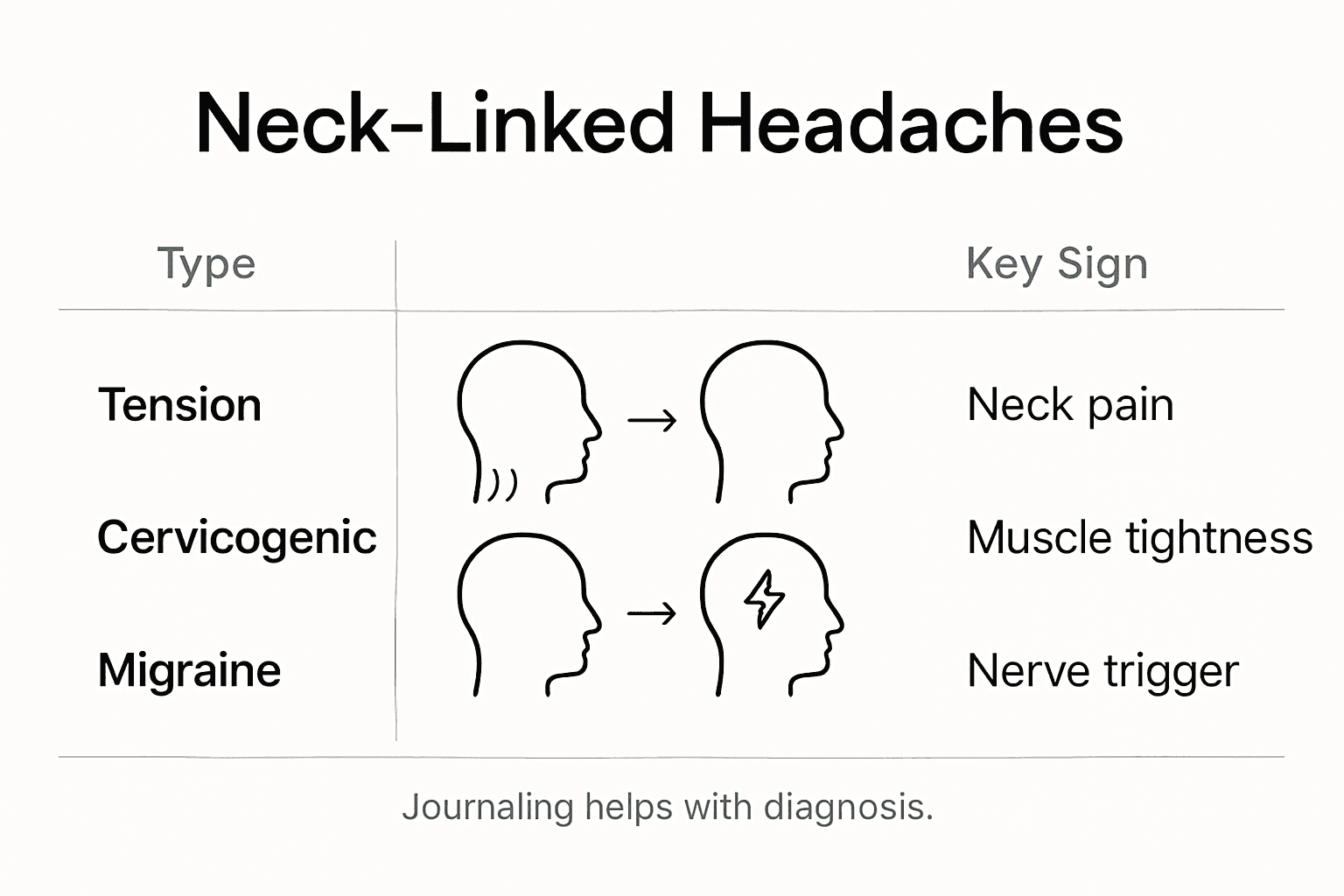
Here’s a summary comparing headache types linked to neck tension:
| Headache Type | Typical Location | Pain Characteristics | Key Cause |
|---|---|---|---|
| Tension Headache | Both sides of head | Mild to moderate, steady pain | Muscle strain, stress |
| Cervicogenic Headache | One side, base of skull | Starts in neck, radiates forward | Cervical spine issues |
The Nervous System’s Impact on Pain
Pain is a sophisticated neurological experience that extends far beyond simple physical sensation, involving complex interactions between sensory nerves, brain processing, and emotional responses. The nervous system acts as an intricate communication network, transforming physical stimuli into comprehensive pain experiences that can vary dramatically between individuals. Nerve pathways transmit signals from injured or stressed tissues, with the brain interpreting these messages through multiple neural circuits that integrate physical, emotional, and cognitive information.
The mechanism of pain perception involves two primary categories: acute and chronic pain. Acute pain serves as a critical warning system, alerting the body to potential injury or immediate threat. Chronic pain, however, represents a more complex neurological phenomenon that persists beyond normal healing periods, often developing independent neural pathways that continue sending pain signals even after initial tissue damage has resolved. This persistent pain state can fundamentally alter nervous system function, creating heightened sensitivity and neurological adaptations that amplify pain perception.
Understanding the nervous system’s pain mechanisms reveals why individual pain experiences differ so dramatically. Psychological factors like stress, anxiety, and past trauma can significantly modulate pain signals, causing the same physical stimulus to generate entirely different pain responses in different people. Neuroplasticity plays a crucial role, with repeated pain experiences potentially rewiring neural circuits and creating long-term changes in how the nervous system processes and responds to potential threat signals. These insights highlight the importance of comprehensive treatment approaches that address not just physical symptoms, but also the complex neurological and emotional components of pain.
Pro Tip: Practice mindfulness meditation to help retrain your nervous system’s pain response and reduce overall pain perception.
Regenerative Therapies for Lasting Relief
Innovative regenerative approaches are transforming the landscape of headache and neck pain treatment, offering patients comprehensive strategies that go beyond traditional pain management techniques. These advanced therapies focus on addressing the root causes of neck tension and headaches by targeting the underlying muscular, neurological, and biomechanical factors that contribute to chronic pain. By combining cutting-edge physical therapy techniques with advanced healing technologies, regenerative treatments aim to restore function, reduce inflammation, and promote long-term healing.

Research from leading neurological institutions explores sophisticated treatment protocols that integrate multiple healing modalities, including targeted muscle strengthening, posture correction, and advanced neurological interventions. The primary goal of these regenerative approaches is to not just temporarily mask pain, but to fundamentally reset and rebalance the body’s neural pathways. This holistic strategy involves comprehensive assessments that examine how muscle tension, nerve function, and neurological responses interact to create persistent head and neck discomfort.
Regenerative therapies employ a multi-dimensional approach to healing, recognizing that chronic pain is a complex interaction of physical, neurological, and emotional factors. Techniques such as specialized physical therapy, neuromodulation, and advanced soft tissue interventions work synergistically to retrain the nervous system, improve muscular resilience, and reduce pain signal sensitivity. By addressing biomechanical imbalances, improving circulation, and supporting the body’s natural healing mechanisms, these innovative treatments offer patients a pathway to sustainable relief and improved functional capacity.
Pro Tip: Consult with a regenerative therapy specialist to develop a personalized treatment plan that addresses the unique neurological and muscular factors contributing to your specific headache patterns.
The following table outlines major approaches for lasting headache relief:
| Therapy Type | Core Focus | Main Benefit | Typical Application |
|---|---|---|---|
| Physical Therapy | Muscle strengthening | Reduces tension, improves posture | Chronic neck pain/headache |
| Neuromodulation | Nerve signal modulation | Lowers pain sensitivity | Persistent neurological pain |
| Soft Tissue Intervention | Tissue healing | Promotes recovery and mobility | Inflammation, limited motion |
Risks and Benefits of Innovative Treatments
Advanced migraine treatments are revolutionizing pain management with targeted therapies that offer unprecedented precision and minimal side effects, presenting patients with new hope for long-term relief. These innovative approaches move beyond traditional medication models, focusing on understanding and interrupting the complex neurological mechanisms that trigger headache pain. By targeting specific peptides and neural pathways, modern treatments aim to provide more effective and personalized pain management strategies that address the root causes of chronic head and neck discomfort.
However, innovative treatments are not without potential risks. Medication overuse represents a significant challenge in headache management, with repeated use of acute pain medications potentially worsening headache frequency and severity. This complex phenomenon underscores the importance of comprehensive treatment plans that carefully balance therapeutic interventions, monitoring patient responses, and preventing unintended neurological adaptations. Medical professionals now emphasize holistic approaches that integrate multiple treatment modalities, ensuring patients receive targeted, responsible care that minimizes potential adverse effects.
The emerging landscape of headache and neck pain treatments combines technological innovation with a deeper understanding of individual neurological responses. Cutting-edge approaches like neuromodulation, advanced physical therapy, and precision medication offer patients more nuanced options that can be tailored to their specific physiological needs. These treatments focus on retraining neural pathways, reducing inflammation, and supporting the body’s natural healing mechanisms, representing a significant shift from traditional symptom-suppression models toward comprehensive, patient-centered care.
Pro Tip: Maintain a detailed symptom journal to help your healthcare provider develop the most effective, personalized treatment strategy for your specific headache patterns.
Find Real Relief from Headaches Through Targeted Neck and Nerve Healing
If you are struggling with persistent tension headaches or cervicogenic headaches caused by neck muscle strain and neurological pain signals, you are not alone. These types of chronic headaches are linked to complex interactions between your muscles and nervous system, creating cycles of discomfort that traditional treatments often overlook. At RegenTech Physical Therapy, we understand how crucial it is to address the root causes of your pain by combining advanced regenerative therapies designed to reduce muscle tension, improve nerve function, and restore natural healing.

Take control of your headache pain today by exploring our specialized treatment options, including Class IV laser therapy, shockwave therapy, and neuromodulation techniques. Our unique three-phase approach, Regenerate, Restore, and Rise, focuses on breaking the cycle of pain to help you recover function and enjoy a life free from constant head and neck discomfort. Don’t wait for another headache to strike. Visit RegenTech Physical Therapy to learn more about how our expert team can develop a personalized plan to help you heal now.
Frequently Asked Questions
What are the common causes of tension headaches related to neck tension?
Common causes include poor posture, prolonged desk work, psychological stress, inadequate sleep, and limited physical movement. These factors can create muscle tightness in the neck and shoulders, leading to tension headaches.
How can I differentiate between tension headaches and cervicogenic headaches?
Tension headaches typically cause mild to moderate pain on both sides of the head, while cervicogenic headaches often manifest as one-sided pain that starts at the base of the skull and radiates forward, with neck movement affecting the intensity of the pain.
What are some effective treatments for neck tension to relieve headaches?
Effective treatments may include targeted physical therapy, stress management techniques, ergonomic adjustments, and regenerative therapies that address both muscular and neurological factors contributing to pain.
How does the nervous system influence the perception of pain from headaches?
The nervous system plays a critical role in pain perception by transmitting signals from injured or stressed tissues to the brain, which interprets these messages. Psychological factors, such as stress or anxiety, can significantly modulate these pain signals, leading to varied pain experiences in different individuals.


