

Recovery can feel uncertain when chronic pain or a recent surgery holds you back from the activities you love in Lewiston, Idaho. Many active adults wonder if lasting relief and stronger injury prevention are truly possible. By combining innovative regenerative physical therapy with modern assessment strategies, you unlock a holistic approach to healing and strengthening your body so you can move forward with confidence and fewer setbacks.
Step 1: Assess Current Capacity and Identify Weaknesses
Building injury prevention capacity requires understanding your body’s current strengths and vulnerabilities. In this step, you will create a targeted roadmap for identifying potential weak points that could lead to future injuries or performance limitations.
Start by conducting a comprehensive self-assessment using multiple evaluation techniques. Capacity assessment frameworks recommend examining physical dimensions through range of motion tests, muscle strength evaluations, and biomechanical screenings. You want a holistic picture of how your body functions across different movement patterns. This means testing not just isolated muscle groups but understanding how they interact during complex movements.
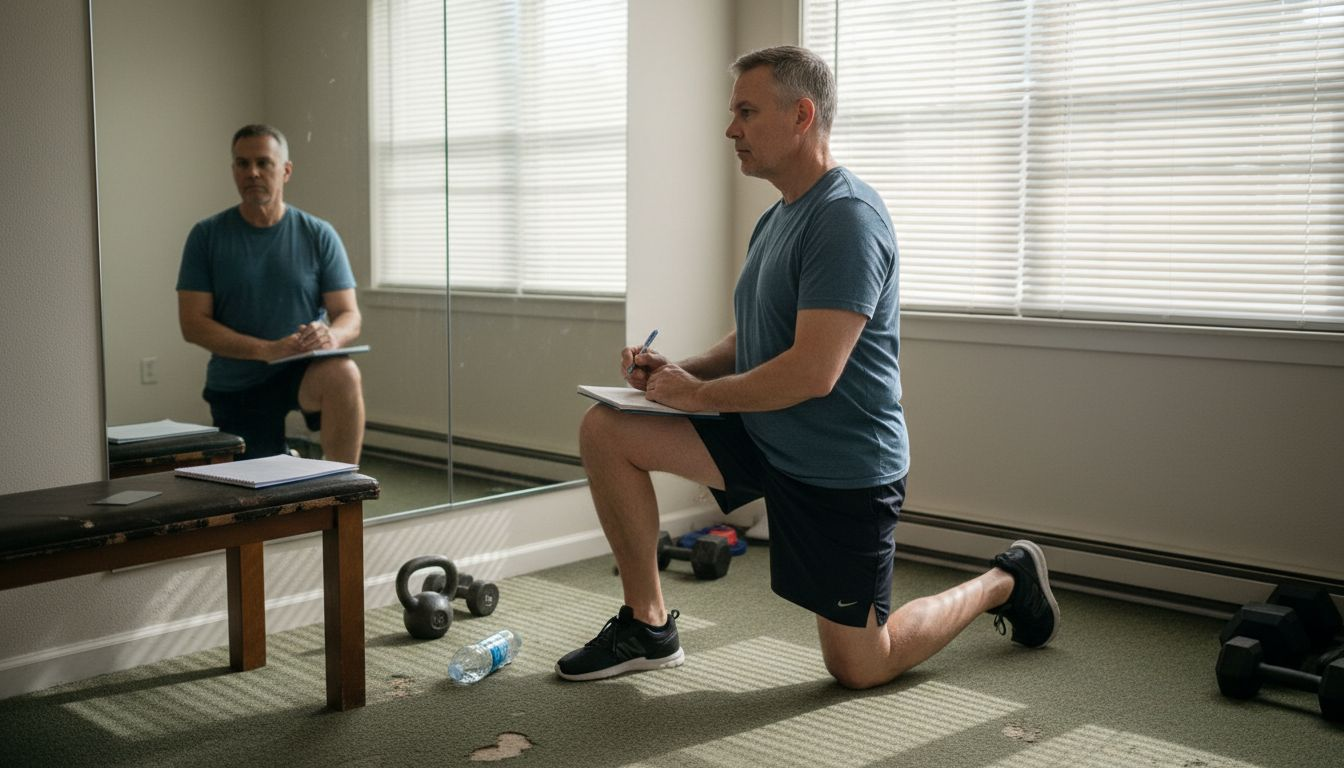
Consider breaking down your assessment into three key categories: physical capabilities, movement quality, and performance resilience. Document observable limitations or asymmetries such as reduced flexibility in specific joints, reduced muscle activation in key stabilizer muscles, or uneven strength between left and right sides. Pay special attention to previous injury sites or areas that consistently feel tight or uncomfortable during training. These are often early warning signals indicating potential future risk.
This summary shows how each capacity assessment addresses risk prevention:
| Assessment Focus | What It Measures | Injury Prevention Value |
|---|---|---|
| Physical Capabilities | Flexibility, strength | Detects weak areas early |
| Movement Quality | Coordination, asymmetry | Identifies faulty movement |
| Performance Resilience | Recovery, endurance | Reveals overuse risk signs |
Pro tip: Keep a detailed movement journal tracking your assessment results to help identify subtle changes and track your progress over time.
Step 2: Integrate Regenerative Therapies to Boost Recovery
Regenerative therapies offer a groundbreaking approach to healing and injury prevention by supporting your body’s natural restoration processes. In this step, you will learn how to strategically incorporate advanced regenerative techniques that accelerate healing and improve overall physical resilience.
Begin by understanding the core principles of regenerative medicine strategies. These innovative approaches focus on restoring damaged tissues through targeted interventions that promote cellular repair and functional recovery. Your integration strategy should include a comprehensive combination of therapies such as Class IV laser treatments, blood flow restriction training, electrical neuromuscular stimulation, and targeted shockwave therapy.
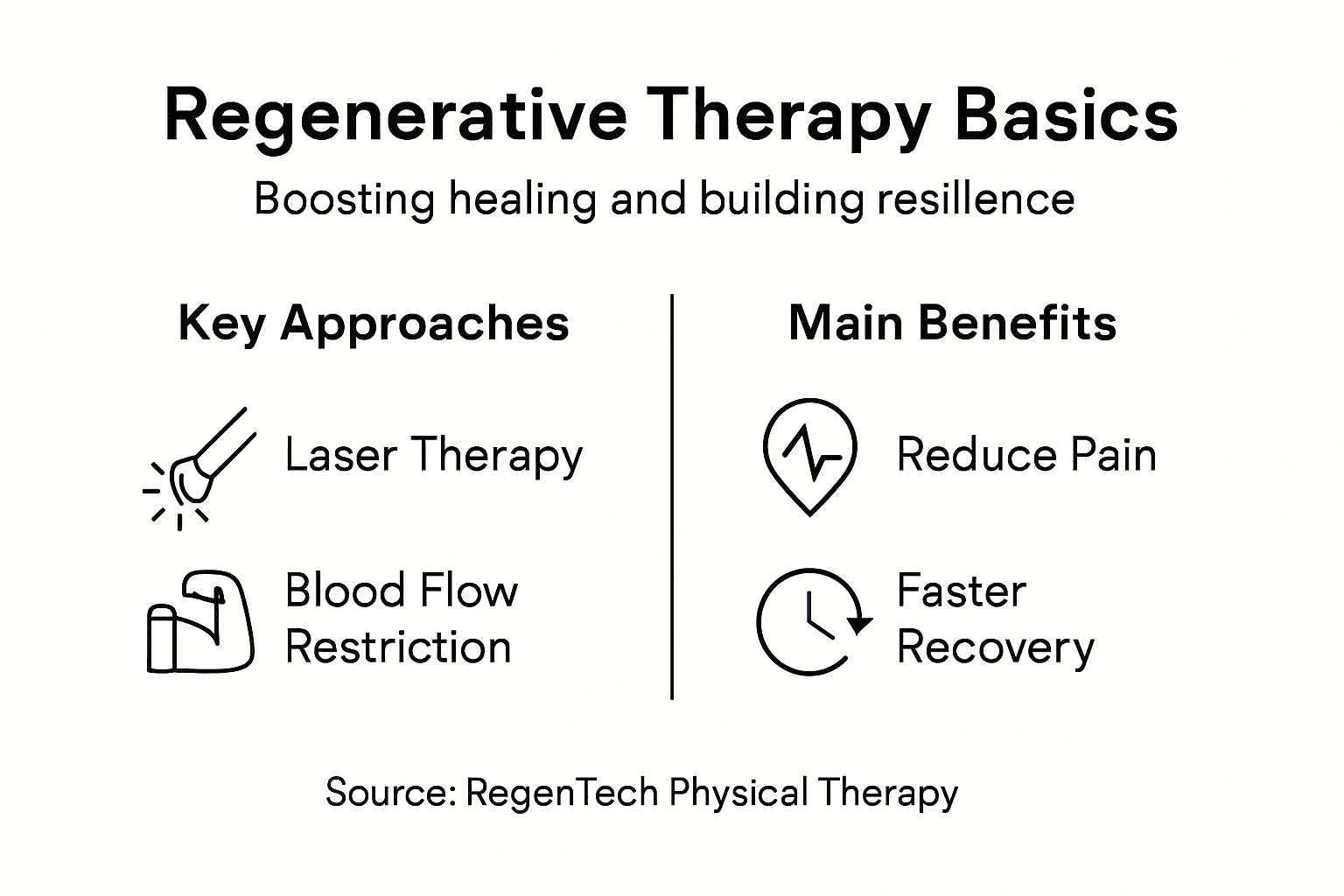
Each regenerative therapy works differently to enhance your body’s healing capabilities. Laser therapy reduces inflammation and stimulates cellular regeneration. Blood flow restriction training creates controlled stress environments that trigger adaptive muscle responses. Electrical stimulation reactivates neural pathways and muscle recruitment patterns. Shockwave therapy breaks down scar tissue and stimulates healing at the cellular level. By combining these approaches systematically, you create a multidimensional recovery protocol that addresses healing from multiple physiological angles.
Here’s a comparison of common regenerative therapies and their primary benefits:
| Therapy Type | Recovery Focus | Main Benefit |
|---|---|---|
| Class IV Laser Therapy | Inflammation reduction | Stimulates cellular repair |
| Blood Flow Restriction Training | Muscle adaptation | Boosts strength safely |
| Electrical Neuromuscular Stimulation | Neural activation | Improves muscle recruitment |
| Targeted Shockwave Therapy | Scar tissue breakdown | Enhances tissue healing |
Pro tip: Consult with a regenerative physical therapy specialist to develop a personalized therapy integration plan tailored specifically to your body’s unique recovery needs and performance goals.
Step 3: Build Resilience Through Progressive Strength Activities
Progressively building physical resilience requires a strategic approach to strength training that adapts and challenges your body while minimizing injury risk. This step will guide you through creating a systematic strength development plan that enhances your overall physical capacity and reduces vulnerability to potential injuries.
Start by implementing progressive strength training techniques that systematically increase resistance and complexity. Begin with foundational movements that engage multiple muscle groups and focus on proper form before adding weight or intensity. Your progression should follow a structured approach where you incrementally increase resistance by 5 to 10 percent once you can complete your current set with perfect technique. This method ensures continuous adaptation without overwhelming your muscular and nervous systems.
Understand that building resilience is not just about lifting heavier weights but creating balanced strength across different movement patterns. Incorporate exercises that challenge stabilization muscles, improve joint mobility, and develop functional strength. This means integrating compound movements like squats, lunges, push-ups, and rows that engage multiple muscle groups simultaneously. Pay attention to your body’s asymmetries and work to balance strength between left and right sides to prevent compensatory movement patterns that could lead to future injuries.
Pro tip: Track your strength progression in a workout journal to identify patterns of improvement and potential areas requiring additional attention.
Step 4: Monitor Progress and Adjust Capacity-Building Strategies
Tracking your physical resilience and injury prevention journey requires a systematic approach to measuring progress and making intelligent adjustments. This step will help you develop a comprehensive monitoring framework that transforms raw data into actionable insights for continuous improvement.
Implement systematic capacity measurement techniques that go beyond simple performance metrics. Establish baseline measurements for key indicators such as range of motion, muscle strength, recovery time, and pain levels. Use both quantitative assessments, like strength tests and range of motion measurements, and qualitative evaluations, including perceived exertion and overall physical comfort. Conduct these comprehensive assessments every four to six weeks to capture meaningful changes in your physical capacity.
Create a dynamic feedback loop that allows for continuous strategy refinement. This means being willing to modify your strength training approach based on objective data and subjective experiences. If certain exercises consistently trigger discomfort or you notice persistent asymmetries in muscle development, adjust your training protocol immediately. Pay attention to subtle signals from your body, such as decreased performance, increased recovery time, or recurring minor aches. These indicators suggest that your current capacity-building strategy might need recalibration to prevent potential injury risks.
Pro tip: Use digital tracking apps or a dedicated notebook to document your progress systematically and identify patterns that might not be immediately apparent.
Step 5: Verify Functional Gains and Prevent Future Injury
Validating your physical progress requires a comprehensive approach that goes beyond simple performance metrics. This step will help you conduct thorough assessments to ensure your injury prevention strategies are working effectively and identify potential future risks before they become problematic.
Implement functional capacity evaluations that provide a holistic view of your physical capabilities. These assessments go beyond measuring raw strength by evaluating how your body performs during complex movement patterns and real-world tasks. Focus on testing your ability to perform functional movements that mimic daily activities and sport-specific motions. This means assessing not just muscle strength but also endurance, balance, coordination, and movement quality across different planes of motion.
Develop a proactive injury prevention strategy by identifying and addressing subtle movement compensations or asymmetries. Pay close attention to how your body responds during dynamic movements such as changing directions, landing from jumps, or performing multi-joint exercises. Look for signs of uneven muscle recruitment patterns, muscle fatigue that occurs more quickly on one side, or reduced range of motion in specific joints. These subtle indicators can signal potential injury risks long before a significant problem develops. Create a systematic approach to tracking these nuanced performance metrics, comparing your results over time to detect any emerging movement dysfunction.
Pro tip: Work with a physical therapist or performance specialist who can provide objective biomechanical analysis and help you interpret subtle changes in your functional movement patterns.
Build True Injury Resilience with RegenTech Physical Therapy
The article highlights a common challenge many face when trying to prevent injuries: simply avoiding stress is not enough to build lasting capacity. If you are experiencing pain, weakness, or frustration managing recurring movement limitations, it is time to focus on regenerative solutions that strengthen your body, restore function, and build resilience. Key concepts like regenerative medicine strategies and progressive strength training are essential for accelerating healing and preventing future injuries.
Discover how RegenTech Physical Therapy in Lewiston, ID, uses advanced techniques such as Class IV laser therapy, blood flow restriction training, electrical stimulation, and shockwave therapy to target exactly the weaknesses and asymmetries discussed in the article. Our personalized three-phase approach of Regenerate, Restore, and Rise offers a proven path to faster recovery, reduced pain, and improved movement quality. Don’t wait until minor issues become major setbacks. Take charge of your healing with expert guidance and breakthrough therapies. Visit RegenTech Physical Therapy today to schedule your consultation and start building your injury prevention capacity the right way.
Frequently Asked Questions
How can I assess my current physical capacity for injury prevention?
To assess your current physical capacity, conduct a self-assessment that includes a range of motion test, muscle strength evaluations, and biomechanical screenings. Document any observable limitations, such as tightness or imbalances, and identify areas that require focused improvement within the next 30 days.
What are regenerative therapies, and how can they help with recovery?
Regenerative therapies, like laser therapy and electrical neuromuscular stimulation, support your body’s natural healing processes. Integrate at least two different therapies into your routine to boost recovery and resilience, aiming for improved comfort levels within four weeks.
What should I include in my strength training program to build resilience?
Your strength training program should focus on progressive techniques that challenge multiple muscle groups while ensuring proper form. Incorporate foundational compound exercises, increasing resistance by 5 to 10 percent when you can complete your sets with perfect technique, ideally every two weeks.
How can I monitor my progress in injury prevention strategies?
Monitor your progress by establishing baseline measurements for key indicators like strength, range of motion, and recovery time. Conduct assessments every four to six weeks to capture changes in performance, and adjust your training strategies based on your findings, aiming for clear improvement indicators.
What functional assessments should I perform to check for injury risks?
Perform functional capacity evaluations to assess your ability to execute daily movements and sport-specific tasks. Look for signs of muscle imbalances or fatigue during dynamic movements, and identify subtle compensations that might indicate potential risks; aim to reassess these indicators every month to maintain injury prevention effectiveness.
Why is it important to address asymmetries during my injury prevention journey?
Addressing asymmetries is crucial because they can lead to compensatory movement patterns that increase injury risk. Implement targeted exercises to balance strength across your body and retest your progress within six weeks to ensure improvements in stability and coordination.
Recommended


