

Most people assume that managing serious pain means choosing between long-term medication or going under the knife. That assumption leaves a lot of people stuck. Physical therapy has quietly become one of the most effective, evidence-backed paths to real, lasting pain relief, and it works by fixing what actually causes the pain rather than covering it up. Whether you’re dealing with chronic joint pain, recovering from surgery, or navigating pelvic health challenges, Lewiston residents now have access to advanced PT techniques that go well beyond the standard exercise sheet. This guide breaks down how it works, what to expect, and why it might be the solution you’ve been looking for.
Key Takeaways
| Point | Details |
|---|---|
| PT addresses root causes | Physical therapy isn’t just symptom relief—it rebuilds function, mobility, and long-term resilience. |
| Evidence trumps medication | Top guidelines recommend PT as a first-line treatment for chronic pain with measurable, lasting results. |
| Specialized care is essential | Chronic pain, post-surgery, and pelvic health issues all require tailored PT for best outcomes. |
| Lewiston offers innovation | Local clinics like RegenTech PT provide leading-edge interventions from laser therapy to pelvic rehab. |
Why Physical Therapy Matters in Pain Management
Pain is your body’s signal that something is wrong. Medication can quiet that signal, but it rarely fixes the source. Surgery can correct structural problems, but recovery is long, and outcomes aren’t guaranteed. Physical therapy takes a different approach: it targets the root cause of pain through movement, tissue work, and patient education, building the body’s ability to heal and function on its own terms.
PT plays a central role in pain management by addressing root causes through individualized programs rather than applying a one-size-fits-all fix. That personalization matters enormously. Two people with lower back pain may have completely different causes, and their programs should reflect that.
The evidence behind PT is strong. ACP guidelines recommend PT as a first-line treatment for chronic low back pain, with moderate evidence supporting it over opioids for long-term outcomes. Patients who follow supervised PT programs often see a 20 to 30 percent reduction in pain scores, lower reliance on pain medications, and measurable improvements in daily function.
Here’s a quick comparison of how PT stacks up against common alternatives:
| Approach | Targets root cause | Long-term benefits | Opioid dependency risk |
|---|---|---|---|
| Pain medication | No | Low | High |
| Surgery | Sometimes | Moderate | Moderate |
| Physical therapy | Yes | High | None |
What makes PT especially powerful is that it teaches you to manage your own recovery. You’re not just a passive recipient of treatment. You learn how your body moves, where it’s weak, and how to protect it going forward. That education is a major reason why physical therapists’ recovery outcomes consistently outperform passive treatment approaches over time.
Key benefits of choosing PT for pain management:
- Reduces pain without medication side effects
- Improves strength, flexibility, and mobility
- Lowers the risk of re-injury
- Addresses the mechanical cause of pain
- Builds long-term movement habits
For those dealing with persistent pain, exploring options like laser therapy for chronic pain alongside traditional PT techniques can accelerate results significantly.
Core Techniques Used in Physical Therapy for Pain Relief
Physical therapists don’t just hand you a list of stretches and send you home. The work is layered, strategic, and adjusted constantly based on how your body responds. Understanding the main tools your therapist uses helps you engage with your program more effectively and see faster results.
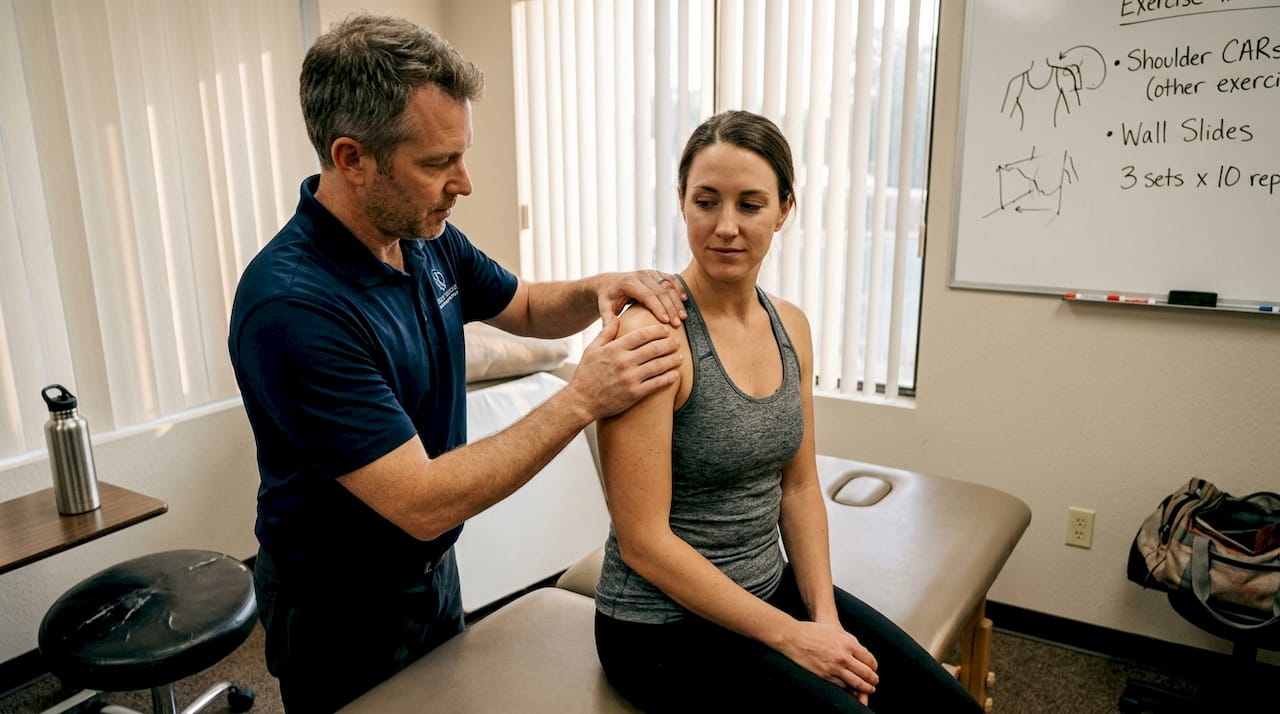
Exercise, manual therapy, neuromuscular re-education, and self-care strategies are the core evidence-based tools in a PT program. Each plays a specific role in reducing pain and restoring function.
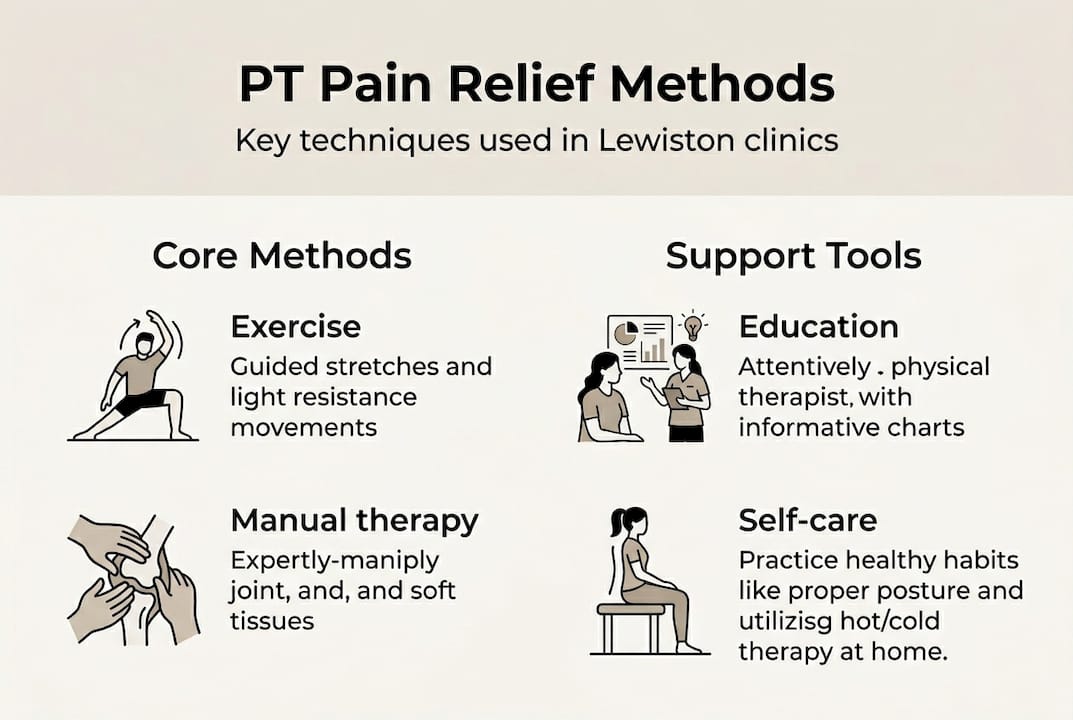
Here’s how the major techniques break down:
| Technique | Primary goal | Best used for |
|---|---|---|
| Therapeutic exercise | Strength and mobility | Chronic pain, post-surgery |
| Manual therapy | Tissue release, joint mobility | Stiffness, restricted movement |
| Neuromuscular re-education | Retraining movement patterns | Nerve pain, central sensitization |
| Dry needling | Trigger point release | Muscle tension, myofascial pain |
| Class IV laser therapy | Cellular healing, inflammation | Acute and chronic pain |
- Therapeutic exercise: Strengthening weak muscles, improving flexibility, and building aerobic capacity all reduce the mechanical load on painful joints and tissues. Consistency matters more than intensity here.
- Manual therapy: Mobilization, myofascial release, and TENS improve circulation, reduce stiffness, and help restore normal tissue function. Hands-on work can break cycles of guarding and tension that exercise alone won’t fix.
- Neuromuscular re-education: Chronic pain often changes how your nervous system processes movement signals. Re-education retrains those patterns, reducing the brain’s overreaction to normal movement.
- Pain education and pacing: Understanding why pain happens and learning to pace activity without fear is one of the most underrated parts of recovery. It directly improves adherence and long-term outcomes.
- Advanced modalities: Clinics in Lewiston now offer laser therapy applications and dry needling as add-ons that accelerate tissue healing and reduce inflammation at the cellular level.
Pro Tip: Ask your therapist to explain why each exercise is in your program. When you understand the purpose behind each movement, you’re far more likely to do it correctly and stick with it.
Specialized PT Interventions for Chronic Pain, Post-Surgery, and Pelvic Health
Not all PT programs look the same, and they shouldn’t. The approach for someone with fibromyalgia is completely different from that of someone who has just had a knee replacement, and both differ from a postpartum patient working through pelvic floor dysfunction. RegenTech’s providers tailor care to each of these groups with precision.
Chronic pain patients often deal with something called central sensitization, where the nervous system becomes overreactive to normal stimuli. PT addresses this by gradually reintroducing movement in a controlled, low-threat environment, reducing the brain’s alarm response over time. This is not the same as pushing through pain. It’s strategic, progressive exposure that rebuilds confidence and function.
Post-surgical recovery is another area where PT makes a dramatic difference. Early mobilization and PT after surgery lead to better walking distance and improved activities of daily living compared to rest alone. Starting PT within days of a procedure, rather than waiting weeks, consistently produces better outcomes. Explore what post-surgical physical therapy looks like in practice to understand the timeline and process.
Pelvic health PT is a specialized area that many people don’t know exists until they need it. Pelvic health physical therapy improves pelvic symptoms including muscle strength and quality of life, with better results when intervention starts early. Conditions like postpartum pain, urinary incontinence, pelvic organ prolapse, and post-surgical pelvic dysfunction all respond well to targeted PT. Learn more about pelvic health PT and why pelvic health matters more than most people realize.
Key populations and what PT targets for each:
- Chronic pain: Central sensitization, movement fear, deconditioning
- Post-surgical: Swelling, scar tissue, strength loss, mobility deficits
- Pelvic health: Pelvic floor weakness, coordination, pain with function
Pro Tip: If you’ve been told pelvic symptoms are “just part of recovery,” get a second opinion from a pelvic health PT. Many conditions that are dismissed as normal are highly treatable.
“The right PT program doesn’t just address your current symptoms. It builds the foundation for how your body moves for years to come.”
What to Expect: The Physical Therapy Journey for Pain Management
Starting PT can feel uncertain, especially if you’ve never done it before or if previous treatments haven’t worked. Knowing what the process looks like takes the guesswork out and helps you show up ready to engage.
- Initial evaluation: Your first session focuses on understanding your pain history, movement patterns, strength, and functional goals. This isn’t a generic intake form. A skilled therapist uses this session to identify the specific drivers of your pain.
- Custom treatment plan: Based on your evaluation, your therapist builds a program that combines exercise, hands-on work, and any relevant technology-based interventions. The plan evolves as you progress.
- Active participation: PT is not passive. You’ll be doing work in the clinic and at home. Patients who engage fully with their home programs see significantly better results than those who rely on clinic sessions alone.
- Progress milestones: Most programs run 6 to 12 weeks, with check-ins along the way to adjust intensity and technique. You should feel measurable improvement within the first few weeks if the program is well-matched to your needs.
- Transition to independence: The end goal is always self-management. Your therapist equips you with the knowledge and habits to maintain your gains long after formal PT ends.
Supervised PT yields better outcomes than unsupervised exercise, and earlier referrals consistently lead to better long-term function. Don’t wait until pain becomes unbearable to seek care.
Pro Tip: Track your pain levels and functional wins in a simple journal during PT. Seeing objective progress on paper is motivating and helps your therapist fine-tune your program. Those working through regenerative pelvic rehab especially benefit from this kind of structured tracking.
Our Expert Take: What Most Pain Guides Miss About Physical Therapy
Most pain management guides focus on what PT is without explaining what makes it actually work for real people. Here’s what years of treating patients in Lewiston have made clear: the technique matters less than the philosophy behind it.
Physical therapy isn’t a collection of exercises. It’s a framework for understanding why your body is in pain and systematically removing those barriers. The best outcomes come when patients stop thinking of PT as something done to them and start treating it as something they’re doing for themselves.
Too many programs skip patient education entirely, and that’s where progress stalls. When you understand what’s driving your pain, you stop fearing movement. That shift alone changes outcomes dramatically.
Lewiston residents have access to advanced tools like regenerative therapies and specialized pelvic health expertise that most small cities don’t offer. But technology only works when it’s paired with the right clinical philosophy: progressive loading, honest goal-setting, and a therapist who treats you as a partner, not a patient number.
Start Your Pain Recovery With Lewiston’s Leading Physical Therapy Experts
If chronic pain, a recent surgery, or pelvic health challenges are holding you back, you don’t have to keep managing them alone or settling for temporary fixes.
At RegenTech Physical Therapy, we combine proven techniques with advanced tools like Class IV laser, dry needling, and shockwave therapy to create programs that actually work. Whether you’re exploring pelvic health physical therapy, looking for a complete regenerative therapy guide, or ready to start post-surgical PT rehab, we’re here to help you move better and feel stronger. Schedule your evaluation today and take the first real step toward lasting relief.
Frequently Asked Questions
How soon should I start physical therapy after surgery or injury?
Early PT initiation after surgery leads to better walking distance and daily function, so ideally within days to weeks of your procedure or injury. Waiting too long allows stiffness and weakness to set in, making recovery harder.
Is physical therapy effective for chronic pain even if other treatments have failed?
Yes. PT targets pain sensitization and improves mobility even when medications or other approaches haven’t delivered lasting results. It works by addressing the underlying cause rather than the symptom.
Does insurance cover physical therapy for pain management in Lewiston, ID?
Most major health insurance plans cover physical therapy when it’s medically necessary for pain management. Always verify your specific benefits and any required referrals directly with your insurance provider before starting care.
What makes pelvic health physical therapy different from other PT services?
Pelvic health PT uses specialized assessment and targeted techniques to strengthen pelvic floor muscles and address conditions like postpartum pain or incontinence. Earlier pelvic intervention consistently leads to better muscle strength and quality of life outcomes.
Are advanced physical therapy techniques like laser therapy safe?
Class IV laser therapy is FDA-cleared and applied by trained physical therapists to reduce inflammation and support tissue healing. When used appropriately, it has a strong safety record and is well-tolerated by most patients.


